Enhancing IT Agility Through DevOps Cloud Services and Cloud Integration Solutions
Teams trying to speed up development and manage complex systems are turning to DevOps cloud services and cloud integration solutions. With the right tools, automation, and expert guidance, businesses can release faster, stay reliable, and scale easily. Read the full article to see how it all comes together.

Listen to the podcast :
Enterprises aiming to reduce release cycles, improve system reliability, and manage complexity are increasingly adopting DevOps cloud services alongside robust cloud integration solutions. This combination empowers teams to automate processes, manage distributed systems, and ensure scalable deployments. When supported by reliable DevOps consulting services, organizations can achieve real IT agility, where continuous delivery, operational efficiency, and adaptability are not just goals, but daily realities.
In this blog, let us break down the core aspects of these services, explore how they contribute to agility, and discuss the role of DevOps cloud transformation in modern development workflows.
Want to reduce software release time, simplify operations, and manage growing complexity with ease?
What Do DevOps Cloud Services Really Offer?
DevOps cloud services include tools, infrastructure components, and platforms that allow software teams to deploy, scale, and maintain applications more efficiently. These services typically support:
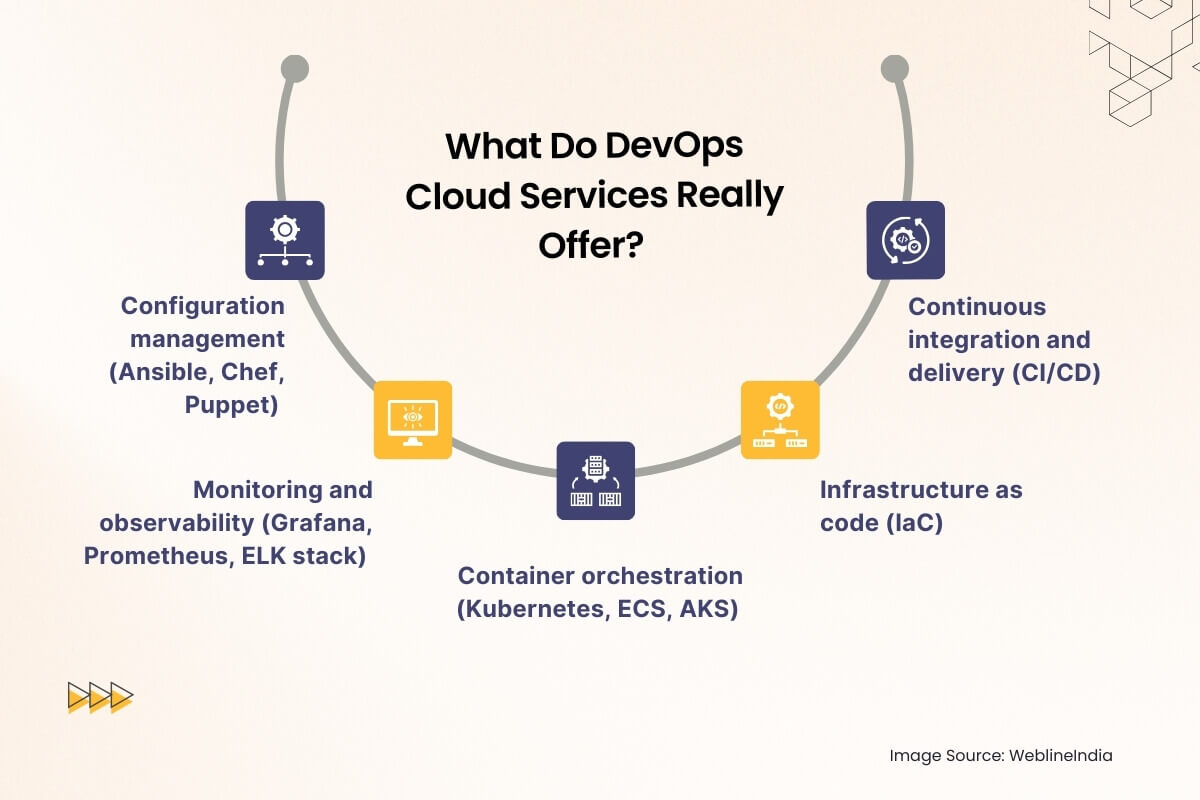
- Continuous integration and delivery (CI/CD)
- Infrastructure as code (IaC)
- Container orchestration (Kubernetes, ECS, AKS)
- Monitoring and observability (Grafana, Prometheus, ELK stack)
- Configuration management (Ansible, Chef, Puppet)
With the rise of distributed systems, managing environments across multiple cloud providers and on-premise setups has become complex. These services reduce overhead by automating provisioning, deployments, and recovery operations.
Whether it’s a greenfield software development project starting from scratch or a brownfield software development project where legacy systems must be accommodated, DevOps cloud services are integral to keeping systems flexible and scalable.
Importance of Reliable DevOps Consulting Services
Choosing and configuring DevOps tools is only the beginning. Proper implementation requires strategic input that matches technology with business goals. That’s where DevOps consulting services play a critical role.
Consultants assess existing IT infrastructure, development processes, deployment models, and security posture. Based on this evaluation, they guide:
- CI/CD pipeline design tailored to organizational workflows
- Cloud readiness assessment and migration plans
- IaC strategy and environment standardization
- Integration of observability and incident management tools
- Transition from traditional release cycles to modern DevOps practices
For offshore brownfield development environments, DevOps consulting services provide migration paths that avoid downtime while integrating legacy components into new architectures. In greenfield scenarios, consultants help set up automated infrastructure, monitoring systems, and CI/CD from the start. These strategic efforts accelerate software delivery while maintaining control and traceability.
Core Elements of Effective Cloud Integration Solutions
As applications evolve into collections of distributed microservices, integrating those components becomes a primary challenge. Cloud integration solutions bridge services, applications, and data across cloud and on-premise environments.
An effective integration architecture might include:
- API gateways (Kong, Apigee, AWS API Gateway)
- Event-driven architecture (Kafka, RabbitMQ, Amazon EventBridge)
- Service meshes (Istio, Linkerd) to manage service-to-service communication
- ETL/ELT pipelines for data synchronization
- Hybrid connectors for secure communication between legacy and modern platforms
Teams use cloud integration solutions to enable real-time communication between services, manage authentication and authorization at scale, and route traffic intelligently. These solutions are critical in hybrid-cloud environments, where seamless connectivity between on-prem and cloud-based workloads is essential for business continuity.
Not sure how to align the right DevOps tools and practices with your business growth strategy?
Accelerating Agility Through DevOps Cloud Transformation
True agility comes when development, operations, and security teams work in tandem with automated toolchains and shared goals. DevOps cloud transformation is the journey that enables this alignment.
It’s not just about moving to the cloud. It’s about changing how teams think about development and operations. Through transformation, teams adopt:
- CI/CD pipelines that deliver code frequently and reliably
- Microservices architecture for modular deployment
- Automated testing frameworks for faster feedback
- Observability tools to monitor systems and detect issues early
- IaC templates for consistent environment provisioning
DevOps cloud transformation ensures that these practices are not siloed but integrated into daily workflows. In greenfield software development, these principles guide architecture from day one. In brownfield software development, transformation is more complex but equally impactful, involving incremental refactoring, containerization, and process redefinition.
Role of Automation in DevOps and Integration
With the right set of automated processes, teams can deliver reliable software at high velocity, reduce operational costs, and respond quickly to market changes. Role of Automation remains the backbone of both DevOps cloud services and cloud integration solutions. The fewer manual steps in the deployment process, the less risk of human error, and the faster new features can reach users.
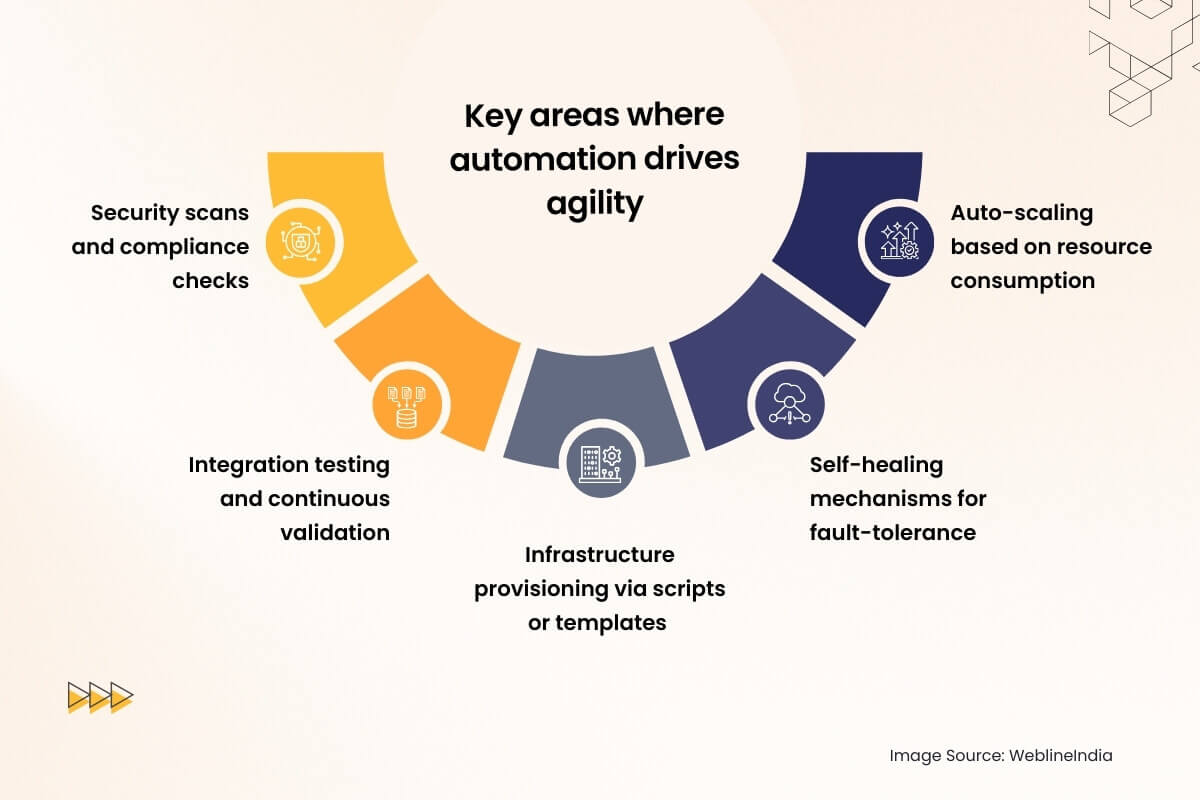
- Auto-scaling based on resource consumption
- Self-healing mechanisms for fault-tolerance
- Infrastructure provisioning via scripts or templates
- Integration testing and continuous validation
- Security scans and compliance checks
Can AI and ML Improve DevOps Operations?
AI and ML are becoming increasingly relevant in advanced DevOps operations. When used appropriately, they improve decision-making, automate incident detection, and optimize resource usage. However, it’s important to integrate these tools thoughtfully. AI won’t replace DevOps principles, but can extend their value when paired with a mature pipeline and reliable data sources.
Common use cases include:
- Using an AI agent to detect anomalies in logs and metrics before they escalate
- An agentic AI solution that suggests deployment windows based on historical success rates
- AI agents that recommend rollback when performance degrades post-deployment
- ML models that predict infrastructure scaling needs
- AI and ML solutions that enhance alerting systems by reducing noise and identifying root causes faster
Benefits of Combining All Four Core Elements
When businesses combine DevOps cloud services, DevOps consulting services, cloud integration solutions, and a solid DevOps cloud transformation strategy, the results are significant. This framework creates a culture of accountability and experimentation—traits essential for organizations aiming to remain competitive.
The synergy between these pillars brings the following advantages:
- End-to-end visibility across development and operations
- Rapid deployment cycles and reduced time-to-fix
- Consistency in infrastructure across environments
- Seamless connectivity between microservices and legacy systems
- Scalable systems that can handle variable traffic loads
Real-World Application Example
A mid-sized logistics company moved from a monolithic to a microservices Java application architecture hosted on AWS. With help from DevOps consulting services, the company adopted IaC, automated deployments, and Kubernetes for container orchestration.
During the DevOps cloud transformation, the team used cloud integration solutions like Kafka for real-time shipment updates and an API gateway for managing third-party vendor access. Greenfield software development allowed for CI/CD pipelines from the start, while some brownfield software development was phased into the new structure.
The result: weekly deployments instead of quarterly, fewer outages, and significantly lower infrastructure costs.
Why WeblineIndia is the Right Partner for DevOps and Cloud Integration
WeblineIndia is a leading IT agency in the USA that specializes in providing comprehensive DevOps cloud services, strategic DevOps consulting services, and robust cloud integration solutions. Whether your organization is planning a complete DevOps cloud transformation or needs support scaling DevOps in a brownfield environment, WeblineIndia delivers proven expertise.
With a strong track record in setting up CI/CD pipelines, microservices architectures, cloud-native automation, and hybrid integration, WeblineIndia supports greenfield and brownfield software development projects across industries. Their team combines strategic insights with hands-on implementation to reduce complexity, accelerate delivery, and increase resilience.
Social Hashtags
#DevOpsCloudServices #CloudIntegration #ITAgility #SoftwareDevelopment #DevOpsTransformation #DigitalTransformation #CloudSolutions #AutomationInDevOps #WeblineIndia
Ready to scale your infrastructure, accelerate delivery, and future-proof your IT operations?
Frequently Asked Questions
Globally Recognized for Unmatched Quality and Reliability




Testimonials: Hear It Straight From Our Global Clients
Our development processes delivers dynamic solutions to tackle business challenges, optimize costs, and drive digital transformation. Expert-backed solutions enhance client retention and online presence, with proven success stories highlighting real-world problem-solving through innovative applications. Our esteemed Worldwide clients just experienced it.
Awards and Recognitions
While delighted clients are our greatest motivation, industry recognition holds significant value. WeblineIndia has consistently led in technology, with awards and accolades reaffirming our excellence.

OA500 Global Outsourcing Firms 2025, by Outsource Accelerator

Top Software Development Company, by GoodFirms

BEST FINTECH PRODUCT SOLUTION COMPANY - 2022, by GESIA

Awarded as - TOP APP DEVELOPMENT COMPANY IN INDIA of the YEAR 2020, by SoftwareSuggest