Around 20% of Software Projects Operate Without QA: Is Your Team Taking That Risk?
Around 20% of software projects operate without a formal QA process, putting performance, security and user experience at risk. This blog explores why skipping software testing is a costly gamble and how a strong QA strategy helps businesses deliver reliable, scalable and secure software.

Listen to the podcast :
The present-day enterprises cannot ignore rapid digital evolution; the pressure to deliver software at breakneck speeds has never been higher. Markets move fast, competitors move faster, and stakeholders often prioritize a live URL over a polished product. This environment has birthed a concerning statistic: approximately 20% of software projects currently operate without a formal Quality Assurance (QA) department or process.
While the immediate savings in time and payroll might look attractive on a quarterly spreadsheet, the long-term reality is far grimmer. Operating without a dedicated software testing strategy is not a shortcut to success; it is an invitation to systemic failure.
When teams bypass QA, they aren’t just skipping a phase of development; they are essentially gambling with the brand’s reputation and financial stability. The software QA importance cannot be overstated because it serves as the final line of defense between a functional tool and a digital disaster.
This blog explores why this 20% gap exists, the catastrophic risks involved, and how professional software testing services provide the safety net necessary for sustainable growth.
Is your software project protected against hidden bugs and failures?
The Myth of the Bug-Free Developer
The myth of the bug-free developer suggests that highly skilled programmers can test their own work thoroughly enough to eliminate the need for independent QA. This belief is misleading because developers, no matter how experienced, tend to validate their code based on how it should function. Their perspective is naturally biased toward intended outcomes rather than unexpected user behaviors. As a result, critical flaws often slip through unnoticed.
Quality assurance specialists, on the other hand, approach software with a different mindset. They actively look for ways to break the system, simulating unpredictable real-world conditions that developers rarely anticipate. This distinction highlights why QA is not optional but essential. Without it, projects risk overlooking vulnerabilities that can compromise performance, security, and user trust.
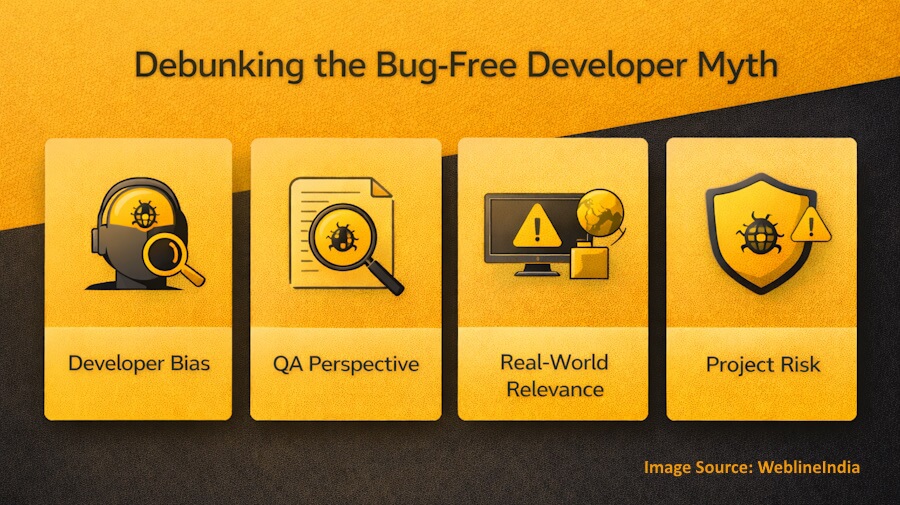
- Developer bias: Programmers test for expected logic, which limits their ability to uncover hidden flaws.
- QA perspective: Specialists explore edge cases, such as poor connectivity or malicious inputs, to expose weaknesses.
- Real-world relevance: QA replicates unpredictable user behavior that controlled development environments cannot.
- Project risk: Skipping QA leaves software vulnerable, with nearly 20% of projects failing to include this safeguard.
Ultimately, the notion of a bug-free developer undermines the resilience of software systems. True reliability comes from collaboration—developers ensuring functionality and QA engineers probing for failure. Together, they create software that is not only efficient but also robust enough to withstand the chaos of real-world use.
Why Cheap Testing is Expensive
The most common justification for skipping software testing services is budget. Small to medium-sized enterprises often view QA as a luxury. However, industry data consistently shows that the cost of fixing a bug increases exponentially the later it is found in the Software Development Life Cycle (SDLC).
- In Development: Fixing a bug costs a few minutes of a developer’s time.
- In QA: It costs a few hours to log, track, and re-test.
- In Production: It costs thousands, if not millions, in lost revenue, emergency patches, and legal consultations.
When a project operates without a software testing strategy, it accumulates technical debt. This debt eventually comes due, usually at the most inconvenient time, such as during a major product launch or a peak sales period. The 20% of teams taking this risk are essentially taking out a high-interest loan that they will have to pay back with interest during a crisis.
Security is the Silent Killer of Untested Software
In 2026, cybersecurity is the top priority for every enterprise. A single vulnerability can lead to a data breach that costs a company its entire future. Projects that lack rigorous automated software testing for security are essentially leaving their front doors unlocked in a dangerous neighborhood.
Automated security scans and penetration testing are vital parts of a modern software testing strategy. These tools can identify common vulnerabilities like SQL injection, Cross-Site Scripting (XSS), and insecure API endpoints before the code ever reaches a public server. For the 20% of projects without proper safeguards, a security breach is inevitable. Losing customer data doesn’t just lead to fines; it wipes out trust, and once trust is gone, no marketing effort can truly bring it back.
User Experience (UX) is an Essential Factor
We live in an age of infinite alternatives. If an app crashes twice or a website has a broken checkout button, users don’t wait for a patch; they simply move to a competitor. Software that lacks professional software testing services often suffers from a clunky and inconsistent user experience.
Quality Assurance isn’t just about finding crashes; it is about ensuring the software is intuitive and performant. Performance testing is a key pillar of automated software testing to ensure that the application remains responsive under heavy load. If 20% of projects are skipping this, they are effectively handing their customers over to the competition. A single glitchy experience is often enough to trigger permanent user churn.
The Strategic Advantage of Automated Software Testing
As software grows in complexity, manual testing becomes a bottleneck. This is where automated software testing transforms from a luxury into a necessity. Automation allows for regression testing, the process of ensuring that new code changes haven’t broken existing functionality.
In projects where there isn’t a proper testing plan, regression testing often gets skipped because doing it by hand takes too much time. As a result, every new update feels risky—like rolling the dice.
- Will the new feature break the login screen?
- Will the database stop working?
With automated testing, these worries are solved quickly. What used to take days can now be checked in minutes, making software releases faster and much safer.
Integration and Scalability Risks
Software does not exist in a vacuum. It must integrate with third-party APIs, legacy databases, and various operating systems. A project without a robust QA process often fails at the integration stage. What works on a developer’s local machine might fail spectacularly when deployed to a cloud environment with different configurations.
Furthermore, scalability is a major risk for the 20% of teams operating without QA. Without load testing, you have no way of knowing if your architecture can handle 10,000 concurrent users. Discovering a scalability limit during a viral marketing moment is a tragedy that can be easily avoided with a proper software testing strategy. Professional software testing services simulate these high-traffic scenarios long before the public ever sees the site.
The Hidden Cost of Developer Burnout
One often overlooked aspect of software QA importance is the health of the development team itself. In environments without QA, developers are responsible for their own testing and, more painfully, for fixing the constant stream of production bugs. This leads to a culture of firefighting.
When developers spend 60% of their time fixing old mistakes rather than building new features, morale plummets. This stagnation makes it difficult to retain top talent. High-quality developers want to work on innovative projects, not spend their careers patching leaky boats. A company can invest in software testing services to protect its most valuable asset: its people.
Implementing a Robust Software Testing Strategy
Moving out of the risky 20% requires a shift in mindset. A modern software testing strategy should be integrated into the very fabric of the development process, often referred to as DevSecOps.
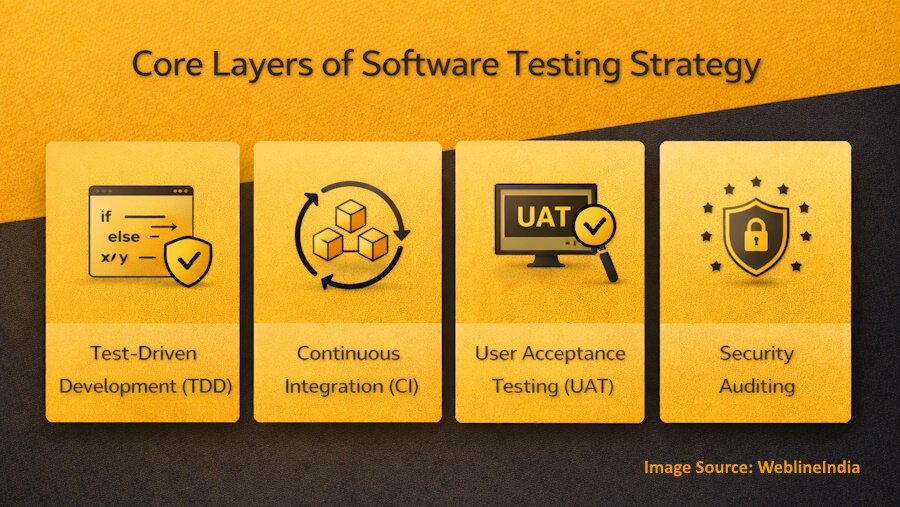
Companies can adopt these practices to ensure that their software is not just functional, but resilient and scalable. This involves:
- Test-Driven Development (TDD): Writing tests before the code is even written.
- Continuous Integration (CI): Using automated software testing to validate every single code commit.
- User Acceptance Testing (UAT): Ensuring the software solves the problem for the end-user.
- Security Auditing: Constant monitoring for new vulnerabilities.
Want to release software faster without risking quality?
Choosing the Right Partner for Quality Assurance
Many companies lack the in-house resources to build a full-scale QA department from scratch. This is why many successful enterprises turn to offshore partners to provide the necessary expertise and scale. When looking for software testing services, it is crucial to find a partner that understands both the technical and the business requirements of your application.
A great QA partner doesn’t just find bugs; they provide insights into how to improve the overall architecture and user experience. They help you transition from a reactive posture to a proactive one, ensuring that every release builds upon the success of the last.
Assure Software Project Quality with WeblineIndia
Navigating the complexities of modern software requires a partner who refuses to compromise on quality. WeblineIndia is a renowned IT agency specializing in offshore software development, providing top-notch quality testing and assurance. We understand the high stakes of the digital marketplace and the immense importance of software QA for your business continuity.
Why Choose WeblineIndia
- Expertise in offshore software development
- Strong focus on quality testing and assurance
- Deep understanding of business continuity needs
Tailored Software Testing Strategy
Our team specializes in creating a customized software testing strategy that aligns with your specific business goals. Whether you are a startup launching an MVP or an enterprise maintaining a legacy system, we provide the expertise needed to eliminate risks.
Services Offered
- Functional testing
- Performance testing
- Security testing
- Usability testing
Innovation Meets Software Quality
Innovation moves fast, but quality must move faster. At WeblineIndia, we stay ahead of the curve by leveraging cutting-edge automated software methodologies and testing tools. Our commitment to excellence means we don’t just check boxes; we ensure your software is a robust tool that drives growth.
Key Advantages
- Use of advanced automated testing tools
- Modern methodologies for faster, more reliable QA
- Focus on building growth-driven, resilient software
Compliance and Standards
We pride ourselves on our flexibility and technical depth. Our QA Engineers team can implement software standards and industry norms as required by the client or application. From ISO standards to specific regulatory requirements like HIPAA or PCI-DSS, our QA experts ensure your software is compliant and world-class.
Compliance Expertise
- ISO standards
- HIPAA compliance
- PCI-DSS compliance
- Industry-specific regulatory requirements
Your competitive advantage is that we do not let your project be a part of the 20% that takes unnecessary risks. Partner with WeblineIndia and turn your software quality into your greatest competitive advantage.
Social Hashtags
#SoftwareQA #SoftwareTesting #QualityAssurance #DevOps #SoftwareDevelopment #AutomationTesting #TechLeadership #AppDevelopment #DigitalQuality #TechInnovation
Ready to ensure your software never becomes part of the risky 20%?
Frequently Asked Questions
Globally Recognized for Unmatched Quality and Reliability




Testimonials: Hear It Straight From Our Global Clients
Our development processes delivers dynamic solutions to tackle business challenges, optimize costs, and drive digital transformation. Expert-backed solutions enhance client retention and online presence, with proven success stories highlighting real-world problem-solving through innovative applications. Our esteemed Worldwide clients just experienced it.
Awards and Recognitions
While delighted clients are our greatest motivation, industry recognition holds significant value. WeblineIndia has consistently led in technology, with awards and accolades reaffirming our excellence.

OA500 Global Outsourcing Firms 2025, by Outsource Accelerator

Top Software Development Company, by GoodFirms

BEST FINTECH PRODUCT SOLUTION COMPANY - 2022, by GESIA

Awarded as - TOP APP DEVELOPMENT COMPANY IN INDIA of the YEAR 2020, by SoftwareSuggest