Metrics That Matter: How to Measure Success When You Hire Dedicated Developers in India for a USA Company
Working with developers in India can feel like building a long-distance team that grows stronger with the right checks. Tracking quality, speed, business impact and teamwork helps you see real progress and lasting value. Give the full article a read for the complete story.

Listen to the podcast :
Globalization has come a long way, and the US companies increasingly look beyond domestic borders to find top-tier engineering talent. Choosing to hire dedicated developers in India has become a pivotal strategic move, offering a blend of cost-effectiveness, scalability, and access to a vast and skilled workforce.
India’s reputation as a powerhouse for IT outsourcing means that businesses can significantly ramp up their development capacity. However, simply onboarding a team is not the end of the journey; true success lies in defining and rigorously tracking the right metrics.
This comprehensive guide will explore the essential Key Performance Indicators (KPIs) and metrics that a US company should use to effectively measure the success and value delivered by its offshore developers India. You can ensure a successful and highly productive remote partnership by moving beyond simplistic measures like “lines of code” and focusing on tangible business outcomes, quality, and process efficiency.
Ready to hire offshore developers India who deliver real results? Talk to WeblineIndia.
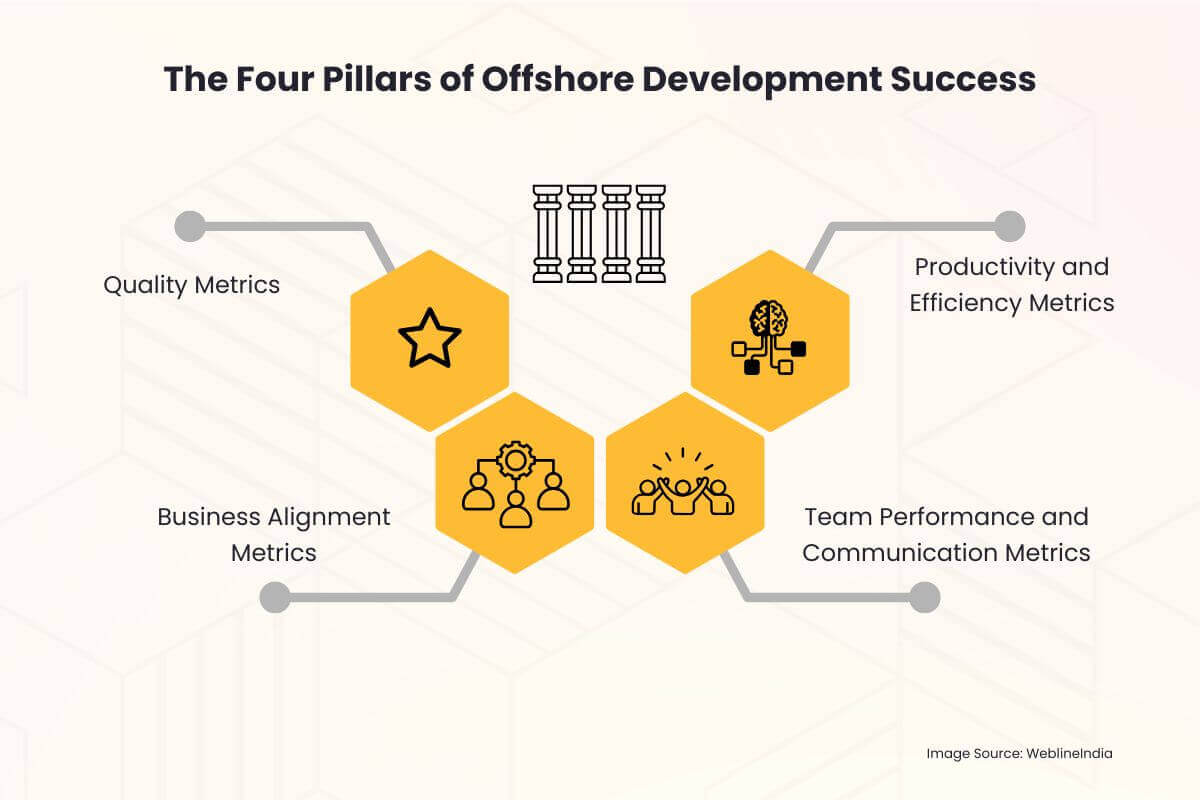
The Four Pillars of Offshore Development Success
Measuring the success of hire remote developers India requires a holistic framework that captures the full spectrum of development value. We can categorize the most important metrics into four critical pillars: Quality, Productivity and Efficiency, Business Alignment, and Team Performance and Communication.
1. Quality Metrics: Ensuring Robust and Maintainable Code
Quality is paramount. The initial attraction of offshore development may be cost savings, but sacrificing code quality will inevitably lead to higher long-term costs in maintenance, bug fixing, and technical debt. These metrics ensure that your hire developers in India deliver robust, reliable software.
- Defect Density: This metric calculates the number of defects (bugs) found per unit of code, often measured per thousand lines of code (KLOC), function points, or feature points. A consistently low defect density is a direct indicator of high code quality and effective testing by your dedicated team.
- Calculation Example: (Number of Defects) / (Size of Code Unit)
- Change Failure Rate (CFR): CFR measures the percentage of deployments to production that result in a failure, incident, or require immediate rollback. This is a critical indicator from the widely recognized DORA metrics (DevOps Research and Assessment). A lower CFR means your development and QA processes are reliable.
- Target: World-class teams aim for a CFR of less than 15%.
- Mean Time to Recovery (MTTR): This metric tracks the average time it takes for a team to restore service after an incident or failure in the production environment. When a bug does slip through, a short MTTR demonstrates the offshore team’s responsiveness, reliability, and ability to diagnose and fix issues quickly.
- Code Coverage: The percentage of application code that is executed by automated tests (e.g., unit tests). A high percentage (ideally 80% or more) confirms the code is well-tested, which greatly reduces the risk of undetected bugs in production.
- Code Review Effectiveness/Turnaround Time: This measures how quickly peer reviews are completed and, more importantly, how many significant issues (defects, complexity, maintainability problems) are caught during the review process. Timely and effective reviews are crucial for maintaining standards when you hire dedicated developers in India.
2. Productivity and Efficiency Metrics: Tracking Output and Velocity
Productivity metrics measure the speed and volume of work delivered by your offshore developers India and the efficiency of your joint development process.
- Deployment Frequency (DF): A core DORA metric, DF tracks how often the development team successfully deploys code to production or releases to end-users. Frequent, smaller deployments are strongly correlated with better organizational performance and faster time-to-market.
- Cycle Time (or Lead Time for Changes): This is arguably the most crucial productivity metric. It measures the total time elapsed from when work on a feature begins (code committed) to when it is successfully running in production. A shorter cycle time indicates efficient flow, minimal bottlenecks, and fast delivery of value.
- Velocity (Agile Metric): In Scrum environments, velocity is the sum of story points or estimated work completed by the team in a sprint. It helps in predicting how much work a team can complete in future sprints, allowing for more accurate project planning. It should be used for team-level planning and stability assessment, not individual performance evaluation.
- Throughput: The rate at which the team completes tasks over a specific period. It is often measured in terms of delivered features, completed tasks, or user stories. Tracking throughput provides insights into the consistent work rate of your hire remote developers India.
- Resource Utilization Rate: This tracks the percentage of available working time that a developer spends actively on project tasks. While 100% utilization is unrealistic (and undesirable, as it leaves no room for learning, meetings, or unexpected issues), this metric helps a US company gauge if their dedicated resources are being effectively allocated.
Need a dedicated team that keeps quality tight and delivery steady? Connect with us.
3. Business Alignment Metrics: Connecting Code to Value
Ultimately, the success of your hire developers in India initiative must be tied to achieving your core business objectives. These metrics bridge the gap between technical output and commercial impact.
- Feature Adoption Rate: Does the code being deployed actually get used? This metric tracks the percentage of users who interact with a newly released feature. Low adoption rates indicate a potential mismatch between the offshore team’s deliverables and actual user needs or product strategy.
- Return on Investment (ROI): The fundamental financial metric. Did the total cost of hiring the offshore team (labor, infrastructure, management) result in a greater financial benefit (new revenue, cost savings from automation, market share gain)? While complex to calculate precisely for every sprint, it’s the macro measure of success.
- Consider: The cost savings realized when you hire offshore developers India versus a domestic team should be explicitly tracked against the value of the software delivered.
- Time-to-Market (TTM): The total time taken from a product idea’s conception to its launch. One of the main benefits of using dedicated developers in India is the potential for faster TTM due to a large talent pool and a 24/7 development cycle advantage.
- Customer Satisfaction Score (CSAT) / Net Promoter Score (NPS): These metrics, gathered via surveys, directly measure the end-user’s satisfaction and loyalty. High scores indicate that the software delivered by the offshore team is meeting quality standards and solving user problems effectively.
4. Team Performance and Communication Metrics: The Partnership Factor
The offshore engagement is a partnership. These metrics focus on the soft skills, cultural fit, and collaborative efficiency, which are especially vital when you hire dedicated developers in India.
- Response Time and Communication Lag: This measures the average time it takes for an offshore developer India to respond to critical queries or feedback from the US-based team. Due to time zone differences, establishing clear Service Level Agreements (SLAs) for response times is essential for seamless collaboration.
- Employee Net Promoter Score (eNPS) / Developer Satisfaction: A happy, engaged developer is a productive one. eNPS measures how likely the dedicated developers are to recommend their outsourcing partner (or the client’s project) to others. Low satisfaction is a precursor to high turnover.
- Team Turnover Rate: High turnover in the dedicated team is detrimental to project momentum and knowledge retention. A low, stable turnover rate confirms that the outsourcing environment is healthy, professional, and retains specialized talent.
- Meeting Effectiveness: This can be measured through brief post-meeting surveys, tracking the percentage of meetings that resulted in clear action items, or the ratio of productive discussion time to administrative overhead. Effective cross-cultural communication is key to success.
The Legacy of WeblineIndia and the RelyShoreSM Model
When a US company decides to hire developers in India, it seeks a partner with a proven track record of mitigating the risks associated with global outsourcing challenges such as communication gaps, inconsistent quality, and security concerns. This is where the legacy of seasoned IT agencies becomes invaluable.
WeblineIndia stands as a renowned IT agency with a deep history in the offshore development market, having been a pioneer in the industry since 1999. They have decades of experience in providing custom software development services for a global clientele, particularly for mobile and web technologies. They have culminated in the creation of their distinct RelyShore outsourcing model.
The RelyShore outsourcing model is not merely an engagement framework; it is a systematic, evidence-based approach designed to guarantee a successful and reliable offshore partnership. It was inspired by systematic methodologies, adapting proven principles to the complexities of software outsourcing.
The core tenets of the RelyShoreSM outsourcing model directly address the common pain points that the metrics discussed above are designed to monitor:
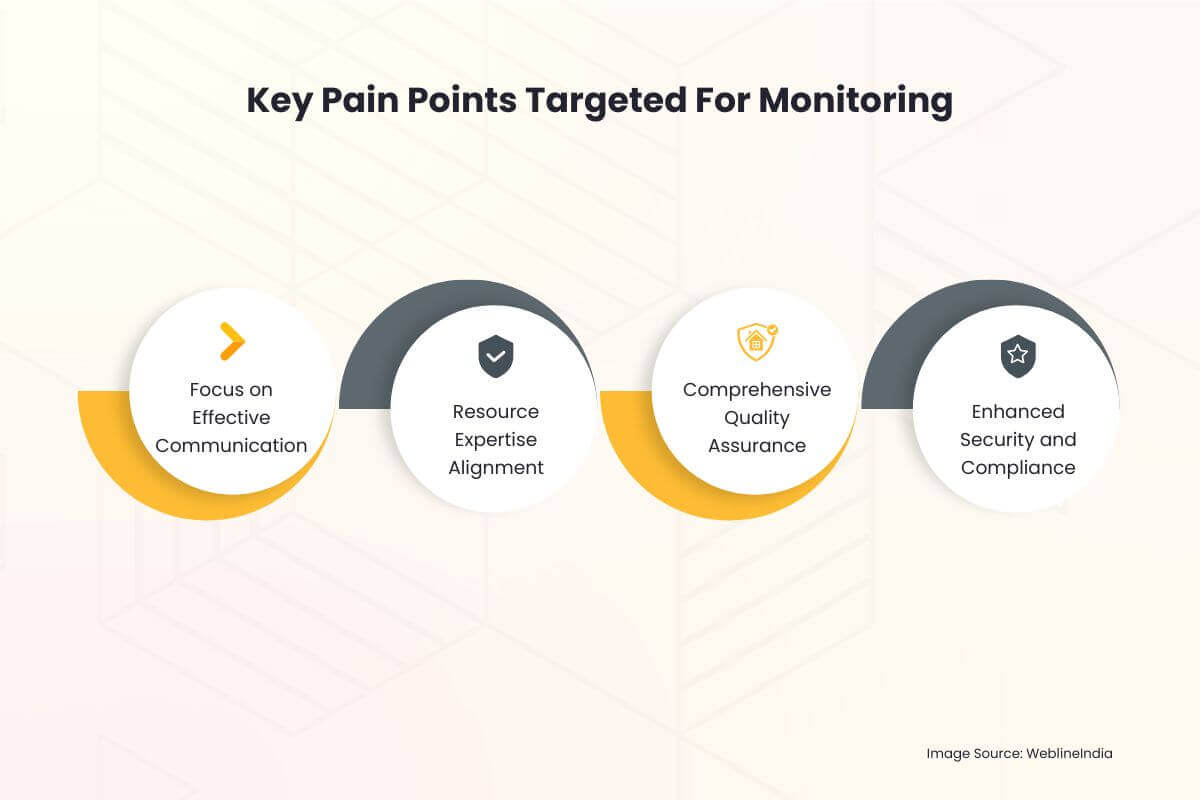
- Focus on Effective Communication: WeblineIndia’s model emphasizes transparent, precise, and consistent communication to overcome linguistic and geographical barriers. This ensures the US client and the offshore team are always in full alignment on expectations and deliverables, directly improving Cycle Time and Response Time metrics.
- Resource Expertise Alignment: A critical pillar of RelyShore is ensuring that the specialized skills of their experienced designers and developers are perfectly matched to the project’s technical and strategic requirements. This direct alignment reduces the risk of mismatched expertise, contributing to a lower Defect Density and higher Velocity.
- Comprehensive Quality Assurance: The model integrates a rigorous QA process with continuous testing and peer reviews at every stage of the Software Development Life Cycle (SDLC). This commitment to quality is what helps them maintain a low Change Failure Rate and high Code Coverage, giving clients confidence in the reliability of the software delivered by their dedicated developers in India.
- Enhanced Security and Compliance: Understanding the critical nature of data security for US firms, the RelyShore model incorporates robust security protocols and adherence to global data compliance standards.
WeblineIndia’s track record, with over 3600 projects delivered and 825+ delighted clients over two decades, is a testament to the effectiveness of their model. For any US company looking to hire remote developers India for a long-term, high-quality partnership, partnering with an agency that has a mature, risk-mitigating model like RelyShore is a fundamental metric of success itself. It represents a foundation of trust, expertise, and operational excellence, ensuring that the development team is not just an outsourced expense but a strategic, high-value asset.
Want a reliable offshore partnership with proven metrics and outcomes? Let’s work together.
Let us Drive Strategic Value with Data
The decision to hire dedicated developers in India is a strategic business move designed to unlock massive potential in scale, speed, and cost-efficiency. However, the value of this investment is realized only when success is clearly defined and objectively measured. By implementing and consistently tracking the key metrics across Quality, Productivity, Business Alignment, and Team Performance, US companies can transform their partnership with offshore developers India from a cost-saving tactic into a powerful, data-driven engine for innovation and growth.
A strong data-driven approach, coupled with an experienced partner utilizing a robust outsourcing framework like WeblineIndia’s RelyShore model, provides the ultimate blueprint for sustained success in the global development ecosystem.
Social Hashtags
#offshoredevelopersIndia #offshoresuccess #softwaredevelopment #uscompanies #remotedevelopment #KPIs #outsourcingIndia #dedicateddevelopers #WeblineIndia
Ready to protect transactions in real time? Let’s build your automation plan together
Frequently Asked Questions
Globally Recognized for Unmatched Quality and Reliability




Testimonials: Hear It Straight From Our Global Clients
Our development processes delivers dynamic solutions to tackle business challenges, optimize costs, and drive digital transformation. Expert-backed solutions enhance client retention and online presence, with proven success stories highlighting real-world problem-solving through innovative applications. Our esteemed Worldwide clients just experienced it.
Awards and Recognitions
While delighted clients are our greatest motivation, industry recognition holds significant value. WeblineIndia has consistently led in technology, with awards and accolades reaffirming our excellence.

OA500 Global Outsourcing Firms 2025, by Outsource Accelerator

Top Software Development Company, by GoodFirms

BEST FINTECH PRODUCT SOLUTION COMPANY - 2022, by GESIA

Awarded as - TOP APP DEVELOPMENT COMPANY IN INDIA of the YEAR 2020, by SoftwareSuggest