The Mobile Security Playbook: Protecting User Data in a High-Stakes Outsourcing Environment
Outsourcing mobile app development can speed up delivery, but it also raises serious data security concerns. This blog explains how businesses can protect user data, reduce vendor risks, and build secure mobile apps with the right offshore development partner.


 ChatGPT
  Perplexity
 The global outsourcing services market size was expected to be close to US $4 trillion in 2024, and is anticipated to reach US $7.11 trillion by 2030, showing a CAGR of 11.3% between 2025 and 2030. According to the Grandview Research report, IT outsourcing has been on the rise and will continue for the next decade.
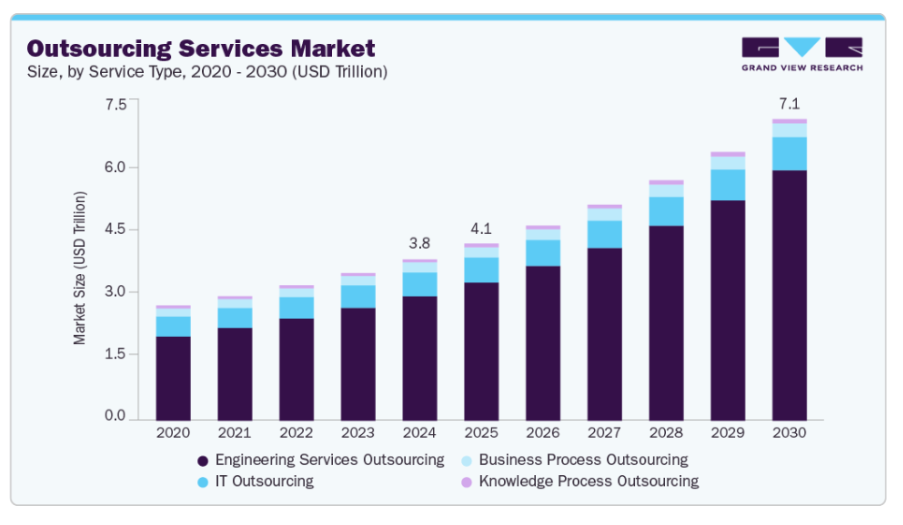
While the volume of outsourcing mobile technology projects is increasing year by year, mobile app development security regarding private and organizational data has been a major concern. The risks associated with data in outsourcing include data breaches, unauthorized access, and loss of data integrity. More than 60% of organizations shall prioritize cybersecurity risks when engaging with third-party providers, including offshore mobile and web app development companies.
It is essential for entrepreneurs to explore what happens to data security while outsourcing mobile app development services to offshore companies. Let’s explore.
Is your outsourced mobile app team putting user data at risk?
Why mobile security is now a business-critical priority
Mobile applications for businesses handle sensitive financial, health, or personal data. Hence, they are prime attack targets worldwide for phishing and cyberfraud. Secure mobile app development is no longer just a technical concern; rather, it directly affects brand trust, compliance, and finally, revenues.
Offshore mobile app development relies heavily on third-party SDKs and distributed teams in most cases. Hence, outsourcing could be both an opportunity and a risk multiplier. You must have a structured approach to mitigate mobile app development security.
Vulnerability of mobile apps for data breach linked with outsourcing
Mobile applications store and transmit highly sensitive data of all kinds – organizational, personal, customer, and so on. Especially apps for healthcare, defense, and finance are quite vulnerable to cyberattacks. Increased usage of APIs, integrations, and cloud services is common for offshore mobile app development.
Risks such as data leakage, insecure communication between teams, and reverse engineering are a few factors that put security in mobile application development at risk.
Mobile app development outsourcing and security paradox
App development outsourcing may accelerate the building process at affordable rates, but it introduces hidden risks of security. Here are a few common reasons you need to understand the outsourcing security paradox:
Distributed development
Offshore mobile app development is a distributed development that expands the attack surface. Multiple vendors, access points, and geographics put your project at a bit of risk. Also, increased exposure to inside threats and misconfiguration adds more concern.
Third-party dependencies and SDK risks
Outsourcing does mean that your 90% of mobile app code is coming from third parties, which brings hidden risks of SDK if your vendor providing mobile app development services does not follow strict safety protocols.
Security ownership
Lack of security ownership when you outsource mobile app development is not uncommon. With software development outsourcing , fragmented accountability between the vendor and client can result in gaps in documentation and security ownership, with each side treating security as the other’s responsibility.
What are the core pillars of mobile app development security?
When you engage with an offshore company for mobile app development services, it is essential to prioritize data security. A strategic approach, planning, and careful evaluation of vendor selection will help you save your project from data breach vulnerability.
Here are the core factors that affect your data security while outsourcing to third-party vendors:
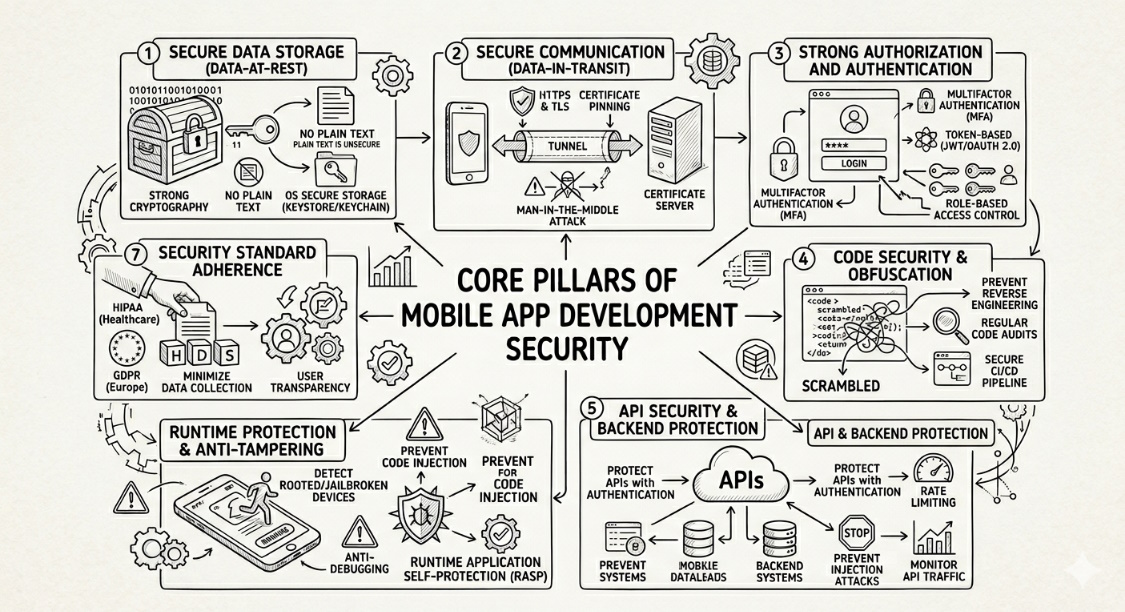
Secure data storage (data-at-rest)
Ask your offshore development team to ensure that sensitive data is using strong cryptography. Avoid storing credentials or tokens in plain text. Sensitive data stored inappropriately is extracted easily, especially when devices are lost or compromised. You can also use OS-level secure storage such as Keystore or Keychain.
Secure communication (data-in-transit)
Another good step towards secure mobile app development offshore is securing communication by enforcing HTTPS and TLS 1. Also, implement certificate pinning for better security. Protecting against man-in-the-middle (MITM) attacks is equally essential.
Strong authorization and authentication
The mobile app development company you deal with should mind strong authentication and authorization of the software architecture. Multifactor authentication (MFA) and token-based authentication with JWT and OAuth 2.0, etc., is preferable. Also, ask them to adapt role-based access control for several milestones they pass through.
Code security and obfuscation
Mobile app development security is possible by preventing reverse engineering through obfuscation. Regular code audits and static analytics are other ways you can ensure data security. Also, integrating security practices into CI/CD pipelines and devops services can help reduce vulnerabilities throughout mobile app development and deployment.
API security and backend protection
Outsourcing enterprises should make sure that their offshore mobile app development company protects APIs with authentication and rate limiting. Validating inputs can prevent injection attacks, and monitoring API traffic for any anomaly or unusual activity can help you protect your mobile project. Poor server-side security reflects that there is a major vulnerability in the mobile ecosystem.
Runtime protection and anti-tampering
Another essential factor in ensuring mobile app development security is to keep a check on rooted or jailbroken devices. Ask your vendor to prevent debugging and code injection while practicing standard coding. Also, use runtime application self-protection (RASP) for double surety.
Security standard adherence
Ensuring compliance with HIPAA (healthcare), GDPR (Europe), and PCI DSS (Fintech), and minimizing data collection can help you protect your data privacy in mobile app development. Try to provide transparency to users by following core security measures in mobile app development:
Regular security testing: static Application Security Testing (SAST), Dynamic Application Security Testing (DAST), VPNs, cloud security, DLP (Data Loss Prevention),
API security: API key rotating, HTTPS/LTS, validated third-party SDKs.
Here are specific mobile app security measures:
| Standard/Framework | Focus Area | Relevance to Mobile Apps |
| OWASP Mobile Top 10 | Common mobile app vulnerabilities | Provides actionable guidance for developers |
| NIST Guidelines | Cryptography, secure design | Ensures compliance with U.S. federal standards |
| IETF Protocols (TLS, IPsec) | Secure communication | Protects data transmission between the app and the server |
| ISO/IEC 27001 | Information security management | Helps organizations establish robust security policies |
| GDPR (EU) | Data privacy & user rights | Critical for apps handling EU citizen data |
| HIPAA (U.S.) | Healthcare data protection | Mandatory for apps dealing with medical records |
Want to protect app data before risks turn costly?
Building an environment for mobile app development security
Building a stringent environment for data security when you hire mobile app developers is crucial. Outsourcing your project should prioritize the safety of data at all levels of your vendor.
Here are some of the key strategies to build the culture:
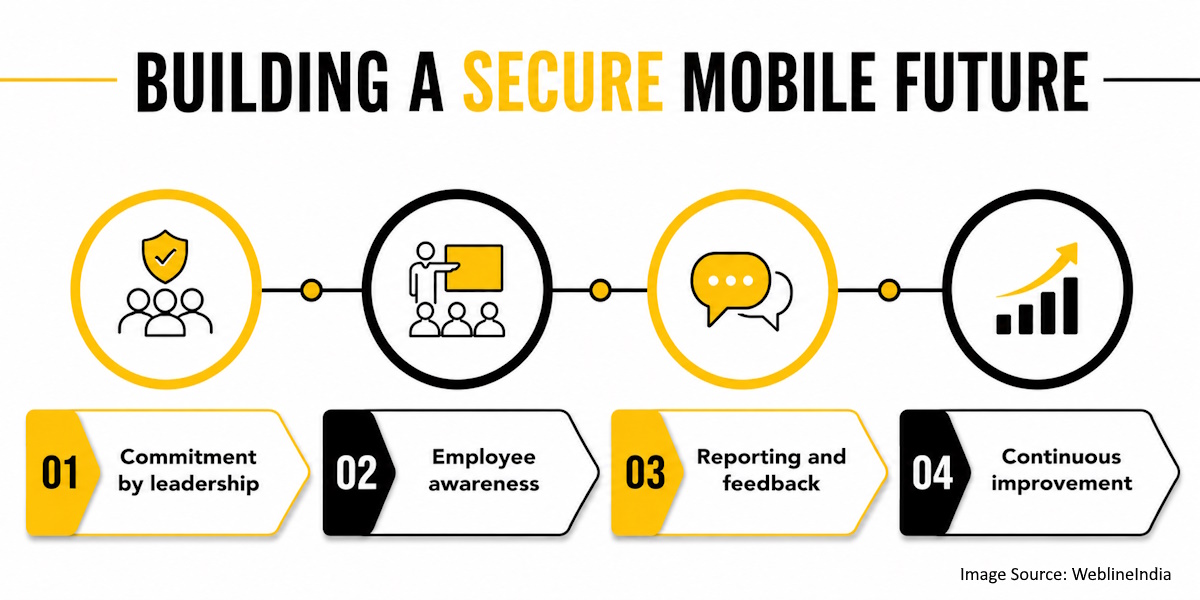
Commitment by leadership
The mobile app development security culture starts at the top, wherein C-suite executives prioritize data security; hence, they set clear objectives for safe practices across the organization. Leaders are supposed to consistently communicate with their teams and ensure security through sharing policies, updates, and monitoring.
Employee awareness
Ongoing training programs can bring necessary awareness among remote dedicated mobile app developers. Learning regularly about the latest potential threats, safe practices, and security policies helps secure mobile projects on the floor. Some mobile app development service providers offshore also practice phishing simulation exercises to make software engineers aware of cybersecurity.
Reporting and feedback
Feedback from employees, stakeholders, and other associates about security and improving the product is one of the sure shots to enhance mobile app development security. Offshore vendors can also have a non-punitive environment wherein open channels for reporting bugs, vulnerabilities, or security concerns are built and used.
Continuous improvement
Conducting frequent security protocol evaluations and practices can help keep up a safe environment. What also works is encouraging associated members and concerned engineers to stay alert about any unwanted or unauthorized access to identify the danger before it occurs.
Future trends in mobile app development security
The future trends where mobile security is headed include the latest in artificial intelligence and enhanced regulations and compliance practices. Here are a few to consider:
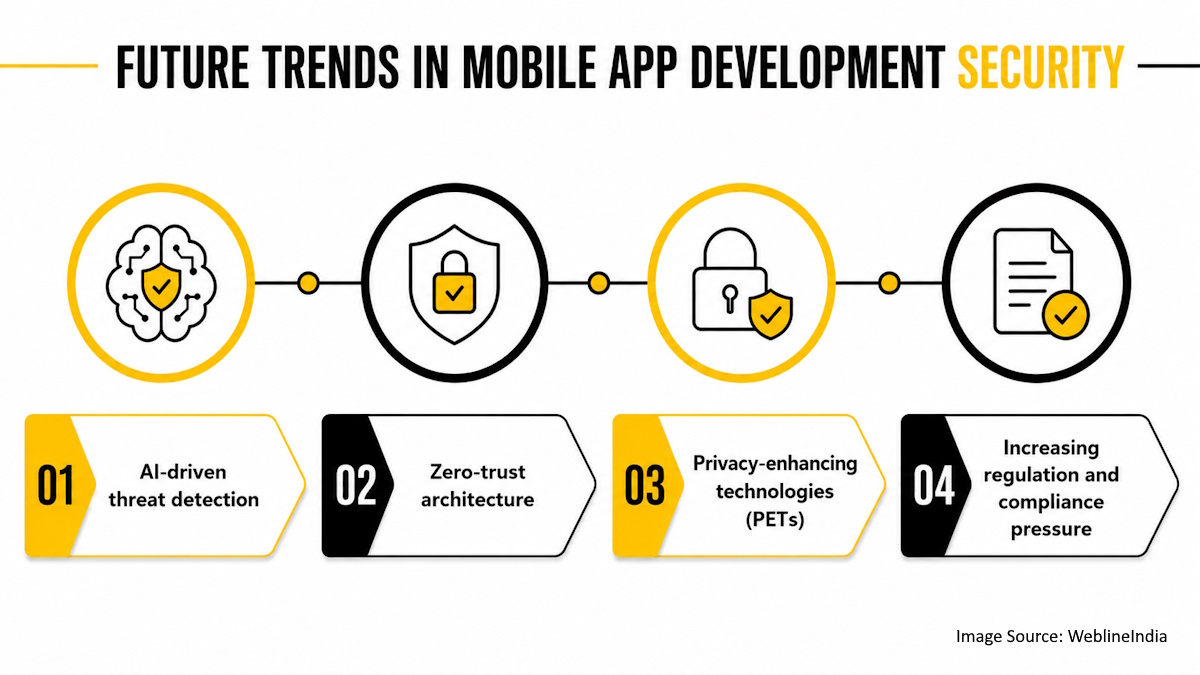
AI-driven threat detection
Artificial Intelligence is paving its way into almost all processes, and mobile app development security is no exception. Powered by AI, systems can analyze user behavior, network patterns, and device signals to check for any anomalies in real time. Such a proactive approach enables dedicated mobile app developers to detect breaches early to reduce response time and minimize damage.
Zero-trust architecture
Zero trust becomes a foundation of the security model for securing mobile app development. It eliminates the implicit trust concepts by constantly verifying users, devices, and requests. When multiple external teams and vendors access sensitive data, it becomes essential to ensure strict access control at every level.
Privacy-enhancing technologies (PETs)
Data misuse incidents have been growing day by day, and PETs are gaining momentum. Measures such as differential privacy and secure enclaves enable enterprises to process data without putting sensitive information at risk. This balances analytics with utter privacy protection.
Increasing regulation and compliance pressure
Global data protection laws are gradually becoming stricter, and they force enterprises to adopt a compliance-first approach. Vendors should keep regularity requirements in mind while building digital products offshore.
WeblineIndia is the right partner for secure mobile app development
When it is about a high-stakes outsourcing environment, WeblineIndia has an extra edge. Enterprises choose us as the right partner as we understand the difference between silent risk accumulation and secure growth.
We stand out by embedding security into each layer of mobile app development services:
- Deep alignment with frameworks such as OWASP
- Robust DevSecOps practices with CI/CD testing
- Proven expertise in tackling global outsourcing projects securely
- Stringent access control, compliance readiness, and data protection protocols
- Focus on privacy-first architecture and secure UX
Stay worry-free about mobile app development security when you partner with WeblineIndia – rather than treating security as a checklist, we treat it as a continuous discipline put into development, deployment, and scaling.
Is your mobile app security ready for offshore development risks?
Frequently Asked Questions
Globally Recognized for Unmatched Quality and Reliability




Testimonials: Hear It Straight From Our Global Clients
Our development processes delivers dynamic solutions to tackle business challenges, optimize costs, and drive digital transformation. Expert-backed solutions enhance client retention and online presence, with proven success stories highlighting real-world problem-solving through innovative applications. Our esteemed Worldwide clients just experienced it.
Awards and Recognitions
While delighted clients are our greatest motivation, industry recognition holds significant value. WeblineIndia has consistently led in technology, with awards and accolades reaffirming our excellence.

OA500 Global Outsourcing Firms 2025, by Outsource Accelerator

Top Software Development Company, by GoodFirms

BEST FINTECH PRODUCT SOLUTION COMPANY - 2022, by GESIA

Awarded as - TOP APP DEVELOPMENT COMPANY IN INDIA of the YEAR 2020, by SoftwareSuggest